
In today’s digital world, Technical SEO is key to boosting our online presence. For businesses in Bulgaria, it’s essential to know and use these strategies well. This SEO guide offers practical steps and useful tools for Bulgarian websites. It helps ensure our website optimisation is effective.
By mastering Technical SEO, we can greatly improve our online visibility. Let’s dive into how to do it.
Understanding Technical SEO
Technical SEO is about making a website work better from a technical point of view. It helps search engines understand and list the site more easily. We look at things like site structure, how fast it loads, and if it works well on mobiles.
What is Technical SEO?
Technical SEO is about making a website better for search engines. It includes things like how fast the site loads and how easy it is for search engines to find. By improving these areas, we can get better rankings and make the site easier for users to use.
Why is Technical SEO Important?
Technical SEO is very important. It helps a website show up more in search results, gets more visitors, and makes the site easier to use. Faster load times and being mobile-friendly can make users happy and more likely to buy. For businesses wanting to be seen online, Technical SEO is key.
The Foundations of Technical SEO
Creating a strong Technical SEO strategy is key. It involves understanding and improving website performance and search engine visibility. Knowing these elements helps build a solid online presence. It also helps avoid mistakes that can slow us down.
Key Elements of a Strong Technical SEO Strategy
A good Technical SEO strategy has several important parts:
- Site Speed: Fast loading times are good for users and search engines.
- Mobile Optimisation: A site that works well on mobile is essential, as more people search on phones.
- Secure Connections: HTTPS is vital for trust and better rankings.
- Structured Data: Clear data about your content helps search engines find it easier.
Common Technical SEO Mistakes to Avoid
Even with a great plan, we can make mistakes. Here are some to watch out for:
- Incorrect redirects can lose link value and harm user experience.
- Not using XML sitemaps can mean search engines miss pages.
- Ignoring mobile optimisation can lose a lot of users.
- Not focusing on site speed can lead to more people leaving quickly.
Technical SEO Bulgaria: Tools of the Trade
To manage Technical SEO well, we use many important website tools. These tools help make our websites better for users and search engines. Tools like Screaming Frog, SEMrush, and Moz are key for good SEO management.
Essential Tools for Technical SEO Management
Screaming Frog is great for checking websites. It finds broken links, redirects, and metadata issues. SEMrush helps with site audits and tracking performance. Moz gives insights into site health and keyword tracking.
Using Google Search Console Effectively
Google Search Console is a big part of our SEO toolkit. It lets us check how our site is doing and find crawling problems. We start by verifying our site to get important data.
Looking at performance reports helps us find and improve high-traffic pages. Fixing issues in the coverage report makes sure our content is found online.
| Tool | Features | Benefits |
|---|---|---|
| Screaming Frog | Site crawling, broken link checking, metadata analysis | Identifies issues quickly, improves site health |
| SEMrush | Site audits, keyword tracking, backlink analysis | Comprehensive insights for better performance |
| Moz | Site health tracking, keyword recommendations, competitive analysis | Enhances visibility and competitive edge |
| Google Search Console | Performance monitoring, indexing status, issue alerts | Ensures optimal search presence and resolves issues |

Website Architecture and Technical SEO
A well-organised website is key for both users and search engines. It makes our sites easy to use and understand. This also helps search engines rank our content higher.
Clear and organised website architecture is important. Following URL best practices is also vital for optimising our sites.
The Importance of a Clear Site Structure
A clear site structure helps users and search engines move around easily. It makes content easy to find and understand. This leads to better user experience and higher search rankings.
Investing in a clear site structure is essential for good technical SEO. It makes our website more efficient and user-friendly.
Best Practices for URL Structure
Good URL practices are key for a better website. URLs should be short, clear, and include the right keywords. This helps both SEO and user experience.
Here are some tips for better URLs:
- Use hyphens to separate words for readability.
- Keep URLs concise; aim for under 60 characters.
- Incorporate targeted keywords relevant to the page content.
- Avoid using excessive parameters or numbers.
- Maintain a consistent structure across the website.
Following these URL best practices can greatly improve our site’s visibility and usability.
Mobile Optimisation
In today’s world, making your website mobile-friendly is key to staying ahead. More and more people use mobile devices to surf the internet. It’s vital to ensure your site works well on phones and tablets.
It’s important to understand the difference between responsive design and dedicated mobile sites. Responsive design changes how your site looks based on the screen size. Dedicated mobile sites are made just for phones, which can sometimes cause problems.
Why Mobile-Friendliness Matters
Many people now use their phones to access the internet. If your site isn’t mobile-friendly, you might lose visitors. This can hurt your business.
By making your site easy to use on mobiles, you can keep people interested. This leads to better customer loyalty and more chances to engage with your brand.
Responsive Design versus Mobile Design
There are two main ways to make your site mobile-friendly: responsive design and dedicated mobile sites. Responsive design changes how your site looks based on the screen size. This makes it easy to use on any device.
Dedicated mobile sites are made just for phones. While they can look good on small screens, they can also cause problems. They might not work well with other devices, leading to a bad user experience.
Page Speed and Performance
Page speed is key to a website’s success. Fast sites make users happy and help with search rankings. We can check our site’s speed with tools like Google PageSpeed Insights and GTmetrix. They give us insights into how fast our site loads.
How to Measure Website Speed
To check our website speed, we can use online tools. Here are a few ways:
- Google PageSpeed Insights: This tool checks how fast your site works on phones and computers. It gives scores and tips to get better.
- GTmetrix: It uses Google Lighthouse and Web Vitals to give a full report on your site’s speed and health.
- Pingdom: A simple tool that checks your site’s speed from different places. It helps you see how well your site performs.
With these tools, we can find out what slows our site down. Then, we can make it faster.
Optimising Images and Media for Faster Load Times
Images and media are big on websites and slow them down. To make sites load faster, we should:
- Compress images without losing quality with tools like TinyPNG or ImageOptim.
- Choose the right file types: JPEG for photos, PNG for images with transparency, and SVG for icons and logos.
- Use responsive images with the
srcsetattribute. This makes sure images are the right size for the device. - Apply lazy loading to media. This loads images only when they’re about to appear on screen.

XML Sitemaps and Robots.txt
Understanding XML sitemaps and Robots.txt is key for better website crawling and optimisation. They help search engines index our pages and control what crawlers see. By using these tools, we make sure our most important content gets noticed.
Creating an XML Sitemap
An XML sitemap lists our website’s URLs, making it easy for search engines to find and crawl them. Here’s how to create one:
- Choose a sitemap generator tool, like Yoast SEO for WordPress or Google XML Sitemaps.
- Enter our website’s details, including URLs and priority levels.
- Save the sitemap as an .xml file.
- Upload it to our website’s root directory.
- Submit it to Google Search Console to get it indexed.
Using Robots.txt to Control Crawling
Robots.txt files are vital for managing search engine bot access. This text file in our root directory tells bots what to crawl and what not to. To use Robots.txt well, we should:
- Block irrelevant pages like admin areas or duplicates.
- Make sure key pages are accessible to crawlers.
- Update Robots.txt as our site changes.
Site Security and HTTPS
In today’s digital world, keeping your site secure is key. It’s not just about protecting user data. It also helps improve your search engine rankings. Using HTTPS is a big step in this journey. It shows that your site has secure connections with users. Let’s dive into why HTTPS is important for SEO and how to set it up.
Why HTTPS is Critical for SEO
HTTPS, or HyperText Transfer Protocol Secure, makes data exchange safe. Google says HTTPS is a ranking factor. Sites with HTTPS protect user data and build trust.
This trust can lead to better engagement and sales. Following SEO best practices means your site will show up more in search results. This gives you an advantage in the online world.
How to Implement HTTPS on Your Website
Switching to HTTPS might seem hard, but it’s easy. Here’s what to do:
- Get an SSL Certificate: Buy an SSL certificate from a trusted source. Your hosting provider can help.
- Install the SSL Certificate: Follow your hosting provider’s guide to install the certificate.
- Update Your Website: Change your site settings to use HTTPS. Update any URLs to secure versions.
- Redirect HTTP to HTTPS: Set up 301 redirects to move all traffic to HTTPS.
- Update External Links: Change any external links to HTTPS.
- Check for Mixed Content: Find and fix any issues where some content is not secure.
By following these steps, your site will be secure and follow SEO best practices. This creates a safe experience for users and boosts your search rankings.
SEO for WordPress
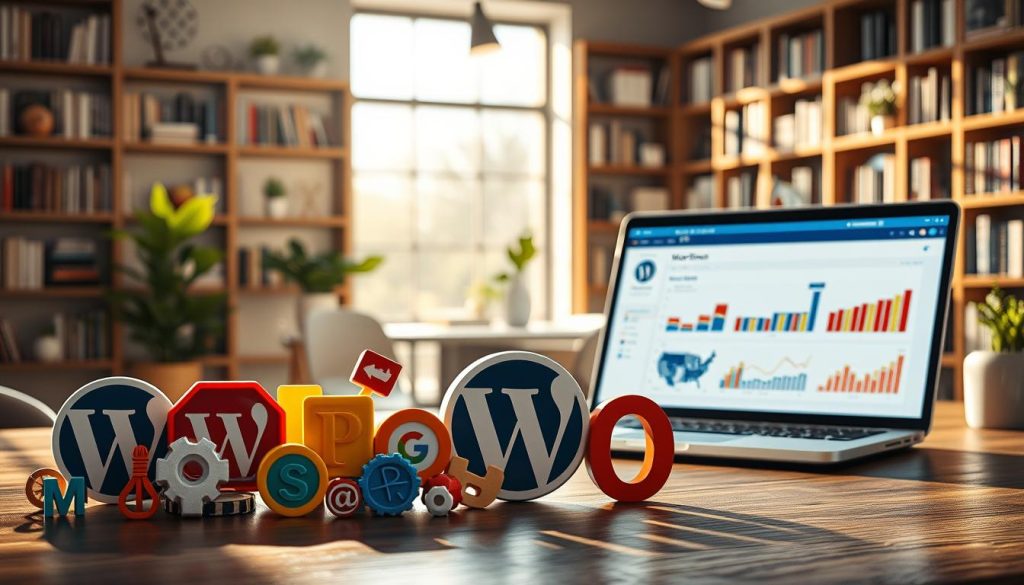
WordPress is a powerful tool for managing online content. It’s easy to use and has features that help with SEO. Knowing how to use WordPress can boost your website’s search engine ranking.
Benefits of WordPress for SEO
Using WordPress for SEO has many advantages. Some key benefits include:
- Customisable permalinks that enhance URL structure
- A responsive design, ensuring compatibility on mobile devices
- Fast loading times, integral for user experience and SEO
- Content management capabilities that support SEO best practices
These features help make your site more visible on search engines. They show the benefits of WordPress for digital marketing success.
Key Plugins for WordPress SEO
To improve your WordPress SEO, using certain SEO plugins is helpful. Some top plugins are:
- Yoast SEO: Offers tools for managing on-page SEO, including keyword use and meta tags.
- All in One SEO Pack: Manages technical SEO aspects from one place, great for all levels.
- Rank Math: Integrates with Google Schema Markup, boosting rich snippet visibility and click-through rates.
Using these SEO plugins can greatly improve your website’s SEO. It also makes managing SEO easier.
WordPress Design and Redesign for SEO
Choosing the right WordPress design is key to boosting our online presence. The theme we pick greatly affects our SEO performance. Speed and mobile friendliness are critical, as they impact our site’s look and search rankings.
Choosing the Right Theme for SEO Performance
When picking a theme, we look for elements that boost SEO. Themes that are light and fast improve loading times. This is good for both users and search engines. Also, themes that work well on all devices are important for reaching more people.
SEO Considerations in Website Redesign
Redesigning for SEO means careful planning to keep and improve our rankings. We need to add SEO-friendly features like header tags and meta descriptions. It’s also important to check our content and make changes to help our site show up better in searches.
WordPress Maintenance
Keeping a WordPress site running smoothly is key. Regular updates are vital for both function and security. It’s important to keep themes and plugins current to avoid vulnerabilities and boost performance.
Regular Updates: Why They Matter
Regular updates touch many parts of our site. Old software can cause security issues, slow performance, and compatibility problems. Here’s why updates are so important:
- They boost security to protect against threats.
- They make our site faster and more efficient.
- They keep our site working well with new tech.
- They quickly fix bugs and technical problems.
Backup Strategies for WordPress Websites
Having good backup plans is a must for WordPress sites. Backups protect our data from loss due to hacking or server failures. Here are some strategies to consider:
| Backup Method | Frequency | Pros | Cons |
|---|---|---|---|
| Manual Backups | Monthly | Control over what to backup | Time-consuming |
| Plugin-Based Backups | Weekly | Automated and easy to use | Depends on plugin stability |
| Hosting Provider Backups | Daily | Requires little effort | Limited access to data versions |
Content Indexing and Crawling
It’s key to make sure our content is found by search engines. This helps our info rank well and stay visible to our audience. But, crawling problems can get in the way. We’ll look at ways to improve content indexing and solve common crawling issues.
Ensuring Your Content is Indexable
To get our content indexed, we need to focus on a few things:
- Use proper HTML tags for headings and metadata.
- Make an XML sitemap to guide search engines to key pages.
- Fix any technical issues that stop search bots from reaching our content.
- Make sure no pages are blocked by robots.txt unless it’s needed.
By tackling these points, we boost our chances of successful content indexing. This means more visibility and engagement for us.
Crawling Issues: Common Problems and Solutions
Crawling problems can really hurt our website’s search engine ranking. Here are some common issues and how to fix them:
| Crawling Issue | Description | Solution |
|---|---|---|
| Blocked Resources | Search engines can’t get to some files needed for pages to work right. | Check and update robots.txt to let search engines access important files. |
| 404 Errors | Pages show a ‘not found’ error when crawled. | Use redirects for broken links to send users to the right content. |
| Slow Load Times | Pages take too long to load, hurting user experience and crawling. | Optimise images, minify CSS and JavaScript, and use browser caching to speed things up. |
By fixing these crawling issues, we keep our content accessible. This helps our site stay strong in search engine rankings.
Local SEO Considerations
In Bulgaria’s digital world, local SEO is key for businesses to reach their community. It boosts visibility in local searches, drawing in customers. Google My Business is a vital tool for this, helping increase our local presence and engagement.
Optimising for Local Search in Bulgaria
Local SEO in Bulgaria requires specific strategies for the local audience. We must ensure our website shows our business name, address, and phone number correctly. Creating content that matters to the community boosts search rankings.
Also, positive customer reviews greatly improve our visibility and trustworthiness.
Leveraging Google My Business for Local Visibility
Claiming and optimising our Google My Business profile is essential for local SEO. It lets us control how we appear in local searches and maps. We should fill out our profile with the right info, quality images, and updates.
Getting customers to leave reviews helps our reputation. This makes it easier for people to find and choose us over others.
- Ensure business details are accurate and up-to-date.
- Utilise posts to share updates or promotions directly on our profile.
- Respond to customer inquiries to foster engagement.
- Encourage customer reviews and respond to them to build trust.
By using these local SEO strategies in Bulgaria, we can make our business more visible. This drives more website traffic and boosts sales.
SEO Analytics and Monitoring
In today’s digital world, it’s key to measure and analyse SEO performance. SEO analytics give us insights into our website’s success and how users interact with it. Tools like Google Analytics help us track important metrics. This lets us see how well our SEO is doing and where we need to improve.
Using Analytics to Track SEO Performance
Analytics tools help us see how many people visit our site and how they behave. We look at things like how many people visit from search engines, how long they stay, and if they do what we want them to. These numbers tell us what’s working and what’s not.
Identifying Opportunities for Improvement
After we’ve looked at our data, we need to understand what it means. We find out where our strategies are weak and make plans to get better. This cycle of checking and changing helps us keep getting better at SEO.
| Metric | Description | Importance |
|---|---|---|
| Organic Traffic | The number of visitors arriving from search engines. | Indicates the effectiveness of SEO efforts. |
| Bounce Rate | The percentage of visitors who leave after viewing only one page. | Reflects user engagement and content relevance. |
| Conversion Rate | The percentage of visitors completing desired actions. | Measures overall effectiveness of marketing strategies. |
| Page Load Time | How quickly a page loads for users. | Affects user experience and SEO rankings. |
Combining Technical SEO with Other Services
Using technical SEO with nominee and financial solutions makes a strong plan. It boosts business work and online presence. This mix helps companies show up better online, thanks to each part working well together.
Working Together with Nominee and Financial Services
Nominee services are key for businesses in tough markets. They offer professional help, making things easier and faster. When paired with SEO, businesses get better search rankings and more trust.
This combo helps companies make a solid online plan. It meets customer needs and follows rules.
Integrating Banking and Payment Processing Solutions
For e-commerce, linking banking and payment solutions with SEO is a big plus. A good online look is even better with safe, easy payment options. This combo draws in customers and turns them into buyers.
By linking SEO with finance, companies offer a smooth experience. This makes customers come back.

Contact Us for Expert Assistance
Looking to boost your website’s performance with Technical SEO? LerriHost is here to assist. We offer expert SEO services designed for your needs. Our team is dedicated to helping you understand Technical SEO and reach your website’s full capacity.
Got questions or need help with Technical SEO? Contact LerriHost at 07538341308. We’re ready to help with site optimisation and improving your online presence.
Your success matters to us, and clear communication is essential. Working with our team gives you access to valuable strategies. These can greatly enhance your website’s visibility and performance. We’re excited to help you tackle Technical SEO challenges.